
Genetics · Gene Regulation and Epigenetics
Eukaryotic Gene Regulation
On this page 7 sections
In 30 seconds
Eukaryotic Gene Regulation covers chromatin remodeling, histone acetylation, DNA methylation, enhancers, silencers, transcription factors, RNA interference, microRNAs, mRNA degradation, protein folding, cleavage, and ubiquitin-proteasome degradation. In general genetics, a concept is strongest when you can connect the symbol or term to a physical or probabilistic process. Genes are not magic labels; they are sequences, chromosome regions, regulatory systems, or population-level variants whose effects depend on molecular mechanisms and context.
This repository is non-clinical. Examples may mention organisms, traits, or laboratory tools, but the notes do not provide medical interpretation, diagnosis, or individualized genetic advice.
Why this matters
Genetics explains how biological information is stored, transmitted, expressed, changed, and analyzed. It connects inheritance patterns to molecular mechanisms and connects molecular variation to evolution. For students, the payoff is being able to move between diagrams, equations, experiments, and real biological meaning.
The college version
Key Concepts
| Term | Meaning | Study Caution |
|---|---|---|
| Chromatin Remodeling | A key idea in eukaryotic gene regulation. | Know the mechanism, not just the vocabulary. |
| Histone Acetylation | A key idea in eukaryotic gene regulation. | Know the mechanism, not just the vocabulary. |
| Dna Methylation | A key idea in eukaryotic gene regulation. | Know the mechanism, not just the vocabulary. |
| Enhancers | A key idea in eukaryotic gene regulation. | Know the mechanism, not just the vocabulary. |
| Silencers | A key idea in eukaryotic gene regulation. | Know the mechanism, not just the vocabulary. |
| Transcription Factors | A key idea in eukaryotic gene regulation. | Know the mechanism, not just the vocabulary. |
How It Works
Start by asking what level of biology the topic describes. Classical genetics often works at the level of alleles, genotypes, phenotypes, crosses, and probability. Molecular genetics works at the level of DNA sequence, enzymes, RNA, proteins, chromatin, and repair systems. Population genetics works at the level of allele frequencies across generations. Biotechnology works at the level of laboratory tools that copy, cut, separate, sequence, or edit DNA.
For eukaryotic gene regulation, the central study move is to track information carefully. In inheritance problems, track alleles through gametes and offspring. In molecular problems, track strand direction, template relationships, codons, or regulatory steps. In population problems, track frequencies and assumptions. In biotechnology problems, track what the tool binds, cuts, copies, or separates.
Many genetics models are deliberately simplified. Mendelian ratios assume specific allele relationships and independent behavior. Hardy-Weinberg equilibrium assumes no evolutionary forces. Gene-regulation diagrams often isolate one gene or operon even though real cells integrate many signals. Use the model, but name its assumptions.
Common Confusions
- Dominant does not mean more common, stronger, better, or medically worse.
- Independent assortment applies most cleanly to genes that are unlinked or far apart.
- A Punnett square predicts probabilities, not guaranteed outcomes for small families.
- Epigenetic regulation changes gene expression without changing the DNA letters.
- Hardy-Weinberg equilibrium is a null model, not a claim that real populations never evolve.
- CRISPR-Cas9 is powerful but not automatically perfectly precise or ethically simple.

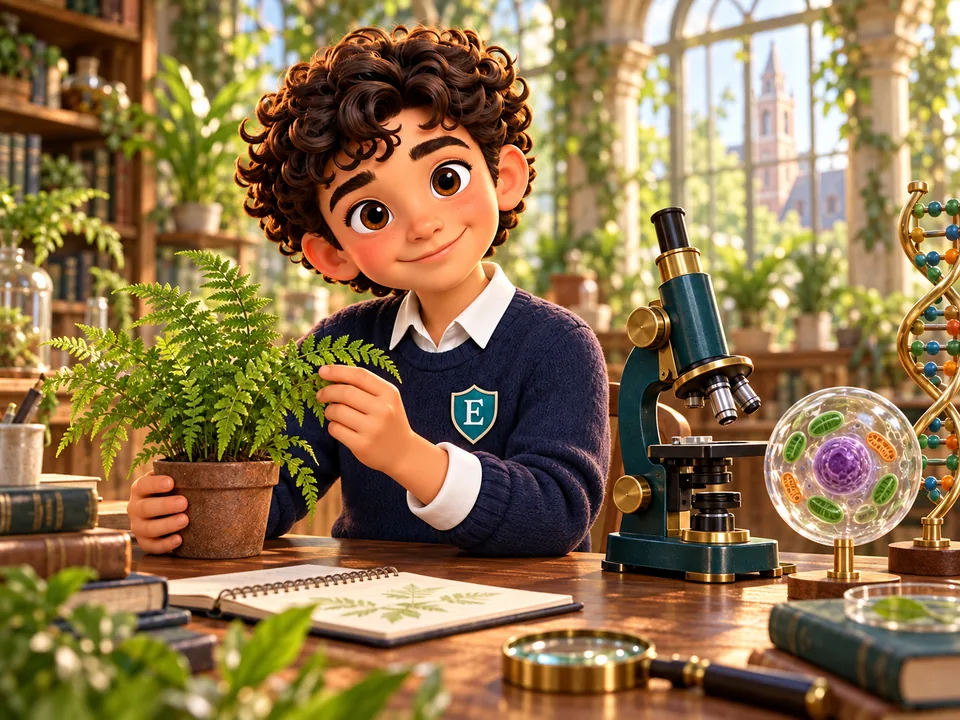
Eli explains
The same idea, in plain words
Explain it like I’m 10
Think of genetics like instructions written in a very tiny alphabet. Classical genetics watches how instruction versions travel through families. Molecular genetics opens the book and studies the letters, copying machines, and readers. Population genetics counts how common different instruction versions are in a group. Biotechnology uses lab tools like scissors, copiers, and sorters to study or change DNA. The big trick is always to follow the information carefully.
Key takeaways
- chromatin remodeling
- histone acetylation
- DNA methylation
- enhancers
- silencers
- transcription factors
- RNA interference
- microRNAs
- mRNA degradation
- protein folding
- Always distinguish genotype from phenotype when interpreting inheritance.
- Always distinguish DNA sequence change from gene-expression change.
- Model assumptions matter; a ratio or equation is only valid under its conditions.
- Laboratory tools are easiest to understand by asking what molecule they recognize and what reaction they perform.
- Define the core terms out loud.
- State the biological level: inheritance, molecule, cell regulation, population, or lab tool.
- Identify the mechanism.
- Name the assumptions or limits.
- Work slowly through symbols, strand direction, ratios, or frequencies.
- Check whether the claim is about DNA sequence, expression, phenotype, or allele frequency.
- Use source-backed explanations rather than memorized slogans.
Study toolsYou’ll learn to
You’ll learn to
- Define the major vocabulary connected to eukaryotic gene regulation.
- Explain the mechanism or reasoning behind the topic.
- Connect the topic to inheritance, molecular biology, evolution, or biotechnology.
- Solve or interpret basic non-clinical genetics examples where appropriate.
- Avoid overgeneralizing simple models beyond their assumptions.
Sources & references
This lesson was adapted from the open educational references above; their licenses and attributions are preserved. See Copyright & Licensing.
Educational content only. It is not medical, legal or professional advice. Found an error? Tell us.